
 info@thevistawindows.com
 Plot no. 1 opposite Plaza 106 , Sec-103, Gurugram 122006
 Mon -Fri 8:00 - 18:00 / Sunday 8:00 - 14:00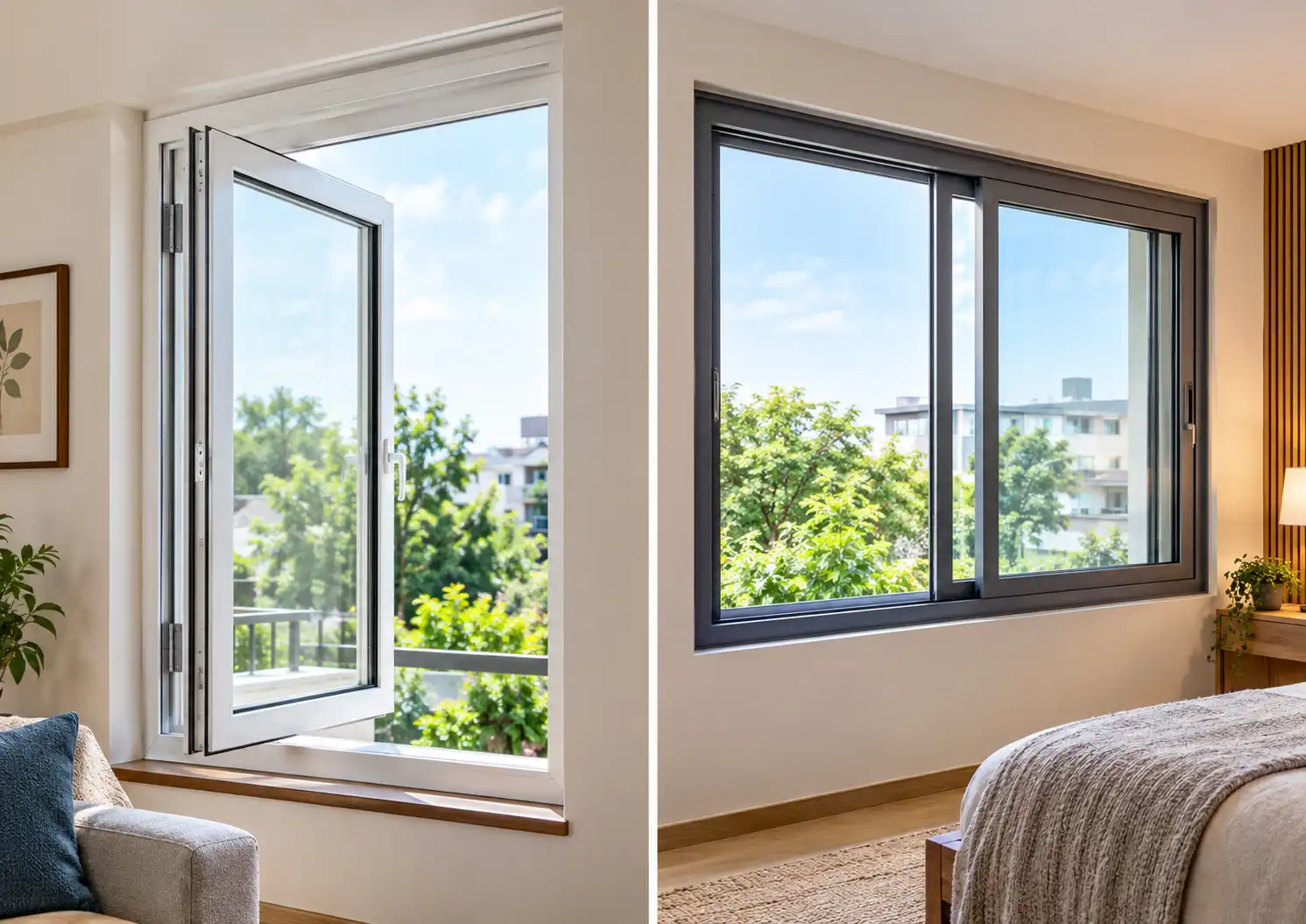
Choosing the right windows can have a major impact on ventilation, natural light, energy efficiency, appearance, and everyday comfort. Among the most popular options for modern homes and commercial spaces are casement and sliding windows. Both designs offer distinct advantages, but their suitability depends on the available space, ventilation requirements, architectural style, and functional needs of the property.
Understanding the differences between casement and sliding windows can help homeowners, architects, and builders make a more informed decision. Both types are available in materials such as uPVC and aluminium, allowing them to be customized according to the property's design and performance requirements.
Understanding Casement Windows
Casement windows are hinged windows that open outward, usually with one or more panels. They are designed to provide a wide opening, making them useful when maximum ventilation and airflow are important.
Advantages of Casement Windows
One of the main benefits of casement windows is their ability to provide excellent ventilation. When fully opened, the sash can allow a significant amount of fresh air into the room. Their design can also help direct airflow into the interior.
Casement windows can provide effective sealing when closed. Properly designed and installed systems can help reduce the entry of dust and outside air while supporting thermal and acoustic performance.
Another advantage is their clean and versatile appearance. Casement windows can complement bedrooms, living rooms, kitchens, balconies, and other areas where outward opening is practical.
Limitations of Casement Windows
Casement windows require sufficient clearance outside the window for the sash to open. This can be a consideration for properties with limited exterior space, closely positioned buildings, or areas where an outward-opening panel could interfere with walkways or other structures.
They may also not be the most suitable option where furniture, curtains, grills, or other interior elements restrict the operation of the window.
Understanding Sliding Windows
Sliding windows operate by moving one or more panels horizontally along a track. Unlike casement windows, they do not require an outward swing, making them a practical choice where space is limited.
Advantages of Sliding Windows
The space-saving design is one of the biggest advantages of sliding windows. Because the panels move along the frame, they do not require additional clearance inside or outside the property.
Sliding windows are particularly useful for balconies, compact rooms, bedrooms, and areas where an outward-opening window may not be practical. They are also available in two-track and three-track configurations, providing different options for ventilation and opening size.
Their simple operating mechanism can make them convenient for everyday use. Large sliding configurations can also provide wide views and generous amounts of natural light, making them suitable for contemporary residential and commercial spaces.
Limitations of Sliding Windows
Sliding windows generally provide a smaller opening area compared with fully opened casement windows. Since the panels move over one another, only part of the overall window area can typically be opened at one time.
The tracks also require regular cleaning to prevent the accumulation of dust and debris. Proper maintenance helps ensure smooth movement and reliable operation over time.
Casement vs Sliding Windows: Which Should You Choose?
For Maximum Ventilation
Casement windows can be a suitable choice when maximum opening and airflow are priorities. Their outward-opening design allows a larger portion of the window to open compared with many sliding configurations.
For Space-Saving Applications
Sliding windows can be more practical where space is restricted. Their horizontal movement makes them suitable for balconies, compact rooms, and areas where outward clearance is limited.
For Modern Architectural Designs
Both casement and sliding windows can complement modern architecture. Casement windows can provide a traditional yet contemporary appearance, while large sliding windows can create a clean, open look with expansive glass areas.
For uPVC and Aluminium Applications
Both designs can be manufactured using uPVC or aluminium profiles. uPVC is often selected for its insulation and low-maintenance characteristics, while aluminium is valued for its strength, slim profiles, and contemporary appearance. The appropriate material depends on the property's design, performance requirements, and budget.
Factors to Consider Before Choosing Your Windows
Before selecting casement or sliding windows, consider the size and location of the opening, ventilation requirements, available space, exterior clearance, desired appearance, glass specification, frame material, and maintenance requirements.
It is also important to consider the local climate and installation conditions. Proper measurements, suitable hardware, quality glazing, and professional installation can significantly influence the performance and durability of any window system.
Make the Right Choice for Your Property
Casement and sliding windows both offer useful features for modern residential and commercial properties. Casement windows can be suitable for spaces where ventilation and a larger opening are priorities, while sliding windows can offer convenient space-saving operation and wide glass areas.
The best option ultimately depends on the property's layout, functional requirements, architectural style, and preferred material. Consulting a professional window manufacturer can help you select a configuration that matches your specific needs.
The Vista Windows deliver high-quality uPVC and aluminium window and door solutions, helping homeowners, architects, and businesses choose suitable window systems for modern residential and commercial spaces.